Everyone is Freaking Out Over Coronavirus…Should You?

Unless you’ve been under a very large rock for the last few weeks, you’ve probably caught wind of a wee little virus that’s been making very, very big news. Since first being identified in the Chinese city of Wuhan, cases of a particular strain of coronavirus—now named COVID-19—have been documented on 4 continents. COVID-19 causes a pneumonia-like respiratory illness that ranges from mild to severe. Because it is a very new virus, we continue to learn more as it is being studied.

Is This a Big Deal?

Kind of, yes. The World Health Organization (WHO) has declared it a Global Health Emergency, while the United States has also declared it a Public Health Emergency. China has reported tens of thousands of cases, and ever since it was confirmed that the illness can be spread from person to person, there has been widespread travel restrictions and quarantine measures put in place targeting those suspected to have traveled to or had contact with others who have traveled to endemic areas.

On its surface, this is just another flu-like illness. But one of the biggest reasons that it has caused such widespread panic is that it has just topped over 1000 deaths (as of the writing of this post) and it is still poorly understood. Another reason for so much concern is that the incubation period—the time between exposure and the beginning of symptoms—is a full two weeks, which is a lot of time for someone to be walking around and unknowingly spreading the disease to others. For reference, the incubation period for most colds and flu is only 1 to 4 days.

How Does it Spread?

Much like other respiratory illnesses, COVID-19 is spread from person to person via respiratory droplets. Basically, when people cough or sneeze, their respiratory droplets carry the virus through the air. These droplets either come into contact with others directly or land on surfaces and spread by touch.

What’s Actually True?

Just like anything else that causes widespread panic, there are an awful lot of mistruths and misconceptions spreading about COVID-19.

First, the virus has absolutely nothing to do with beer…I wish I was joking but this seems to be an actual thing going around the interwebs. Second, you shouldn’t be an asshat to anyone because you think they’re carrying the virus. I literally had 2 people come into the ED during a recent shift who thought they had been infected with the virus because they saw an Asian person on their plane. Not joking. I like to think the best of humanity but sometimes people can be awful.

Buzzfeed has a great ongoing story concerning some of the craziest (and even not-so-crazy) disinformation about COVID-19 that is out there at the moment. Basically, don’t believe anything you hear unless it’s from a trusted source, like the CDC or WHO. The WHO also has a wonderful page addressing some of the more common misconceptions about the virus.

Bottom line, don’t believe anything unless it’s coming from a reputable channel and cites information coming from official health sources like the WHO or CDC.

Should I Panic?

Please don’t! However, do make sure you’re doing everything you can to keep yourself and your family healthy. There is so much we don’t know yet about the nature of COVID-19 and how many cases there actually are. And, much like the flu, those most at risk of serious complications are the very young, very old, pregnant women, and those with co-morbid health conditions or immunosuppressed states.

How Can I Protect Myself?

Obviously, if you’ve either traveled to China recently or have been in close contact with someone who has, you should see your doctor immediately. Most institutions (mine included) have implemented protocols for handling patients with risk factors for COVID-19 in a safe and effective manner. We want to take care of you!

Also, winter months often mean we’re cooped up inside in close proximity to others—make sure you’re covering your mouth and nose if you cough or sneeze, WASH YOUR HANDS frequently, and encourage others to do the same. If you have respiratory symptoms, it’s not a terrible idea to wear a surgical mask if you’re going to be around crowds of people to keep from spreading anything to others (like if you have to be out grocery shopping or something). You can also boost natural immunity by making sure you’re eating well, sleeping enough, and getting regular exercise…you know, things we should be doing anyway 😉

It’s true that researchers are rapidly working on a vaccine, but even if there is something that is found to be effective, there is no guarantee that it will be either a) widely available, or b) affordable to most people, so don’t depend on this as a viable option for protection.

How Would I Know if I Was Infected?

Honestly, if you haven’t been to China recently or around others who have, odds are probably pretty slim given strict quarantine measures in place. But this is tough—again, the incubation period is long and the symptoms are really non-specific, especially given that we’re smack in the middle of flu season. It’s impossible to know how many undiagnosed cases there may have been that may have spread beyond the areas where cases are documented.

The symptoms of COVID-19 are very similar to most viral respiratory illnesses and include fever, cough, shortness of breath, and generally feeling shitty. If you have any of these symptoms, please contact your physician.

Is There a Treatment?

Not really. Again, like the flu or any other viral illness, treatment is supportive—there is no “cure,” just things we do for patients that help manage symptoms. These include things like administering fluids, giving medication for fever and pain, and offering management for cough or trouble breathing. Other than that, the disease has to run its course. The vast majority of people do make a full recovery, but there have been many severe cases and, as I mentioned above, over 1000 known deaths from the disease.

For more information, up-to-date news, and the most recent protocols for providers and the general population concerning COVID-19, check out the Centers for Disease Control and World Health Organization Coronavirus pages.

Image by Gerd Altmann from Pixabay
My Kid is Teething and I’m Losing My Mind

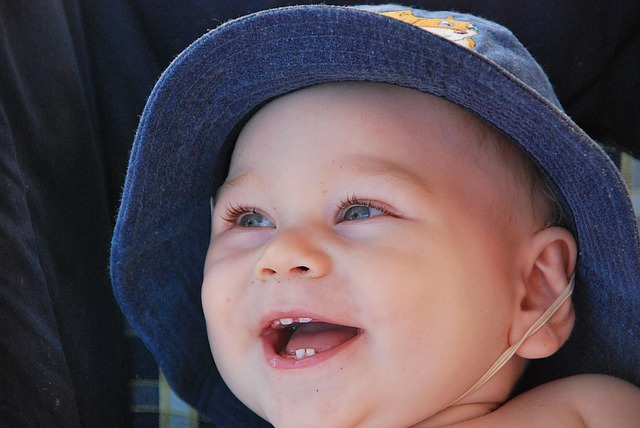
When he’s in pain, my kid has a uniquely horrendous ability to take is all down with him. When he’s teething, my heart goes out to the poor little dude, it really does—his mouth hurts, he can’t sleep, and half the time he’s got a low grade fever. But, damn…can you give the rest of us a break?

There are all kinds of remedies to ease the pain and suffering that comes when baby starts cutting those little teeth, but of course, when you’re in the thick of it you want to cut the shit and know what works and what doesn’t.

First, what works? (And more importantly, what’s safe?)

The very first thing I’ll tell you as both a fellow mom and as a clinician is that you shouldn’t be afraid to offer pain medication. Ibuprofen (Motrin) is my personal favorite, though Acetaminophen (Tylenol) is also a perfectly good choice. Either can be given as often as every 6 hours with the dose based on weight (check the box for correct dose) to soothe pain and the occasional fever that often accompanies teething. During the day, I will give a full dose when my baby is especially fussy and nothing else can soothe him. I will always give a full dose at bedtime. We’ve been through this enough times that I know empirically that it helps blunt the pain enough to keep him asleep longer (read: keep ALL OF US asleep longer) than we would without it.

There are tons of options when it comes to teething toys…sometimes the best solution for baby in the moment is to just let them gnaw away on something.

I have had success with freezer-friendly toys with gel compartments (though ironically my son likes them unfrozen-ha!). Just make sure the gel is nontoxic.

I can also personally vouch for this cult-favorite banana toothbrush toy…it’s a lifesaver and can easily be attached to a tether.

– Soak a plain old washcloth in warm water and ring it out. This works as-is, or you can pop it in the freezer and let it get a little frosty.

– Keep in mind that you don’t need any fancy teething toys to get the job done! Anything non-toxic, non-breakable, and that you don’t care will be utterly destroyed is perfectly fine. Some of our favorites…wooden chopsticks, cardboard page baby books, tea towels, plastic baby feeding utensils, and basically any other random thing they pick up!

Now, what doesn’t work?

Do NOT use over the counter teething creams or gels. It’s easy to assume that these are a “more natural” option, but they often contain topical anesthetics (like benzocaine or lidocaine) and ingredients that can be harmful to small children. Many homeopathic remedies may also contain things that have not been properly tested or approved by the FDA. Sorry, your mom or your friend swearing to you that something is safe DOES NOT mean it’s safe. Topical remedies also tend to wash out of the mouth quickly (especially if baby is drooling) and need to be re-applied frequently, which only increases exposure to harmful ingredients. Again, medications like Ibuprofen or Tylenol dosed correctly are both safer and more effective.

Other items that are popular but dangerous include teething necklaces, bracelets, and beads. Yes, I’ll grant that chewing on them helps ease pain, but with all that gnawing they run the risk of breaking and becoming a choking hazard. Necklaces also pose a strangulation hazard.

Amber beads, in particular, have a huge cult following in the ~wellness community~ but have no proven benefit over safer teething toys. Word on the street is that they release succinic acid, which acts as a natural analgesic…this is true, but only if amber is heated to 400 degrees. And as I mentioned above, any kind of necklace on a baby also poses choking and strangulation risks.

One last thing to keep in mind is that older toys, like all the heirloom baby toys I got handed down from my parents and in-laws, often contain lead and can be extremely harmful. Exercise caution with any hand-me-downs, heirlooms, jewelry, or antiques. If you suspect any signs or symptoms of lead poisoning (unexplained fussiness or new colic, irritability, fatigue, nausea and vomiting, constipation, loss of appetite, headache, or insomnia) you should see a doctor right away. If left untreated, lead poisoning can cause severe and irreversible developmental delay and disability.

Image by Mojca JJ from Pixabay

My No-BS, 3 Minute Makeup Routine

I’ve been in the ER the last month, and rolling straight into inpatient internal medicine next month. So…a LOT of hours and VERY early days. I’m extremely protective of my sleep, so that usually means I often leave myself very little time in the morning to get ready. For all of my fellow makeup-lovers suffering from the AM time crunch, this is my basic routine that has never let me down.

Up front, I should be honest and admit that I’m never going for a quite a full face on days like these. My goal here is to even out my skin, smooth over whatever issues I’m having that day, and add a little extra…something. Get me?

Ok, so first thing’s first. I’ve developed a pretty reliable skincare routine over the last couple of years and I’ve found that as long as I wash and treat my skin properly at night, the only thing I have to do in the morning is splash some cool water on my face, pat dry, and apply some toner with a cotton pad.

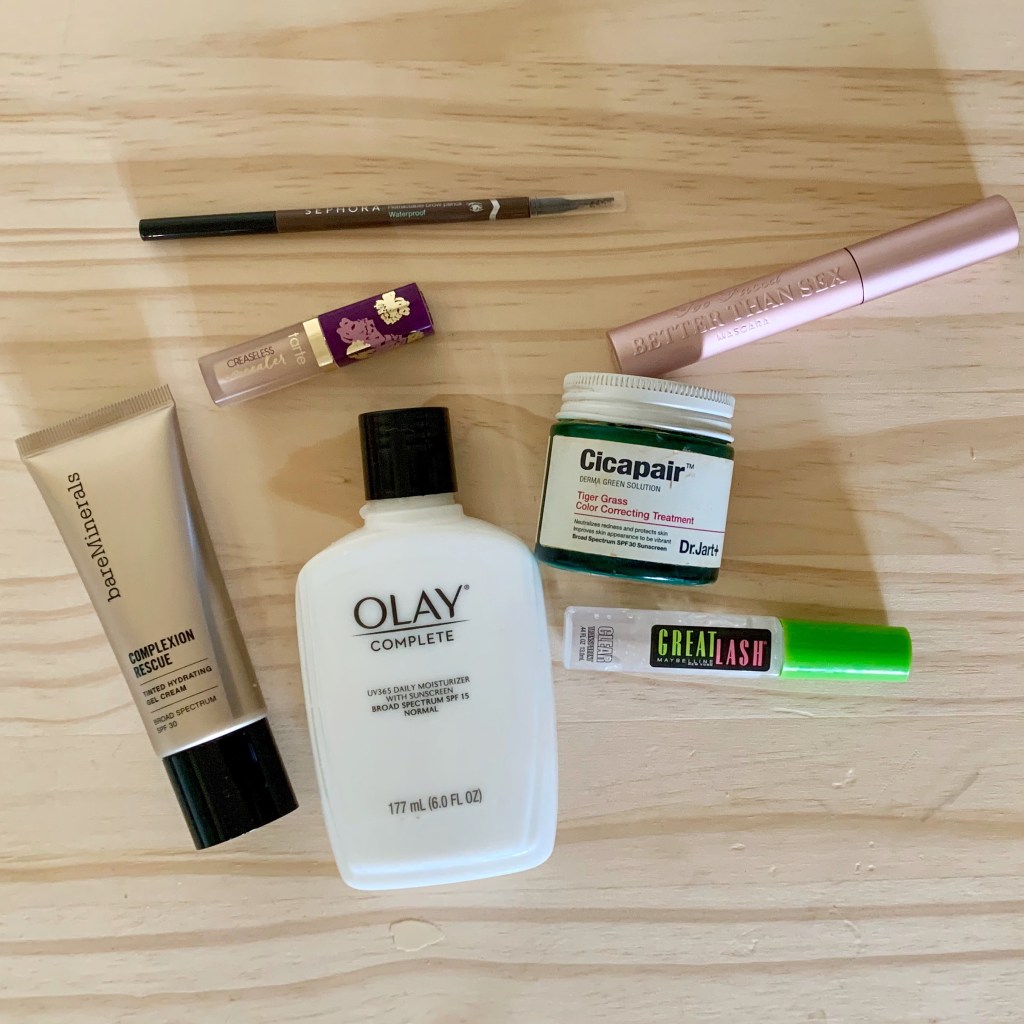
Then I smear some moisturizer all over. I have used Olay Complete since I was a preteen, though I often change it up if I’m feeling adventurous.

Then I put some Cicapair Tiger Grass Color Correcting Treatment all over my face as well–I just use my hands. I’ve been using this stuff for a few years now and I absolutely love it. It really goes a long way to blunt redness and as it changes to match your skin tone, it even provide some (very sheer) coverage. I use this almost every day, even if I’m not wearing any makeup at all. It just makes things so much more even and adds some more SPF.

Next is another old favorite of mine—I add Bare Minerals Complexion Rescue all over. This stuff adds a nice smooth, sheer-ish cover with a dewy finish. If I’m out of this, though, I’ll dab on some foundation and even it out with a brush (whatever I’ve got at the moment…I’m not particularly loyal to any one foundation yet). I much prefer Complexion Rescue since it’s much lighter and takes less time to apply than 99.99% of foundations I’ve tried. Also points for extra SPF.

My eyebrows are both light AND sparse—so just leaving them untouched is not an option. I have tried so, SO many different pencils and the only one I’ll ever use again is the Sephora brand retractable brow pencil. After I fill them in, I set them in place with Maybelline clear mascara. I should note that once every 6 weeks or so, I tint my brows with mustache dye…this has made a huge difference in helping give my normally invisible brows some definition. I also love these Sally Hansen wax strips—I’ve literally used them to shape my brows for almost 15 years, since high school!

Next, I touch up any blemishes or dark circles with a concealer. On really good days, I can skip this step. On really bad days, this can be the most time consuming part of the whole routine. I still have no standout favorite and have tried so many, but at the moment I’m using a travel-size of Tarte Maracuja Creaseless Concealer I got from Sephora with points—so far, so good! Next, I really want to try Fenty Pro Filt’r Instant Retouch Concealer since I love every Fenty product I’ve tried so far. An oldie but goodie and solid standby for me is Maybelline Instant Age Rewind Concealer…I love it for under my eyes, though I feel like it doesn’t quite do enough for red spots or pimples.

Ok! Despite all my rambling, by this point I’m like 2 minutes in. Now I dust a finishing powder all over. I’m currently obsessed with Hourglass Ambient Lighting Finishing Powder. It adds such nice amount of glow and just makes me look so awake! Currently I’m using the Mood Light shade because it works really well with my light skin/pink undertones, but I also like the Luminous Light shade, too.

Next, I add some mascara. I really like Too Faced Better Than Sex mascara. It’s pretty bold, but I wear it almost daily. If I’m feeling particularly low maintenance, though, (ie if I’m anticipating a shift that will be longer than 15 hours), then I’ll only brush some more clear mascara over my lashes…I find that whenever I go much longer over 13 or 14 hours, colored mascara starts to run/I start rubbing my eyes out of exhaustion 😉

LAST THING!! In my last 5 seconds, I spritz a setting spray all over. I have used Urban Decay All Nighter for at least 2 years, and it works so well. I have tried several other brands and nothing stacks up.

Now for coffee. So, so much coffee. It’s going to be a long 12-hour shift, y’all.

Nothing in this post is sponsored. Promise.

What to do When Your Baby Has a Stuffy Nose

None of this post is sponsored. Any product links are just the exact items I happen to use and love in my own home.

I swear it happens to me about once a month no matter the season—my son gets stuffy, snotty, and turns into a complete fuss monster. Because current guidelines don’t recommend any kind of decongestant medication for children under 6, these little colds leave us all miserable and shit out of luck. However! There are a some things you can do to make it a little easier on them (and everyone else in the house) while you ride out the snot fest.

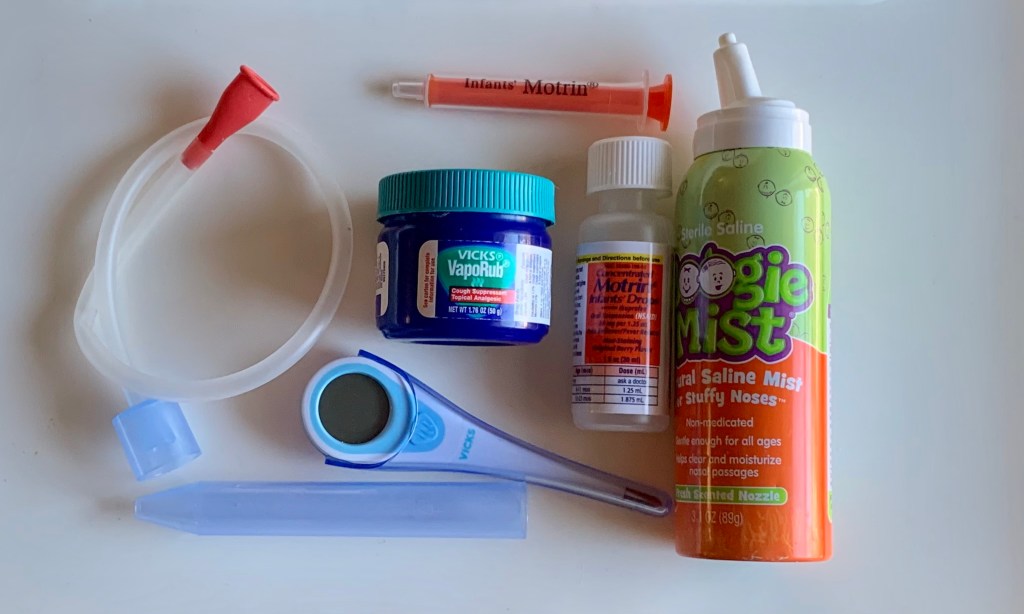
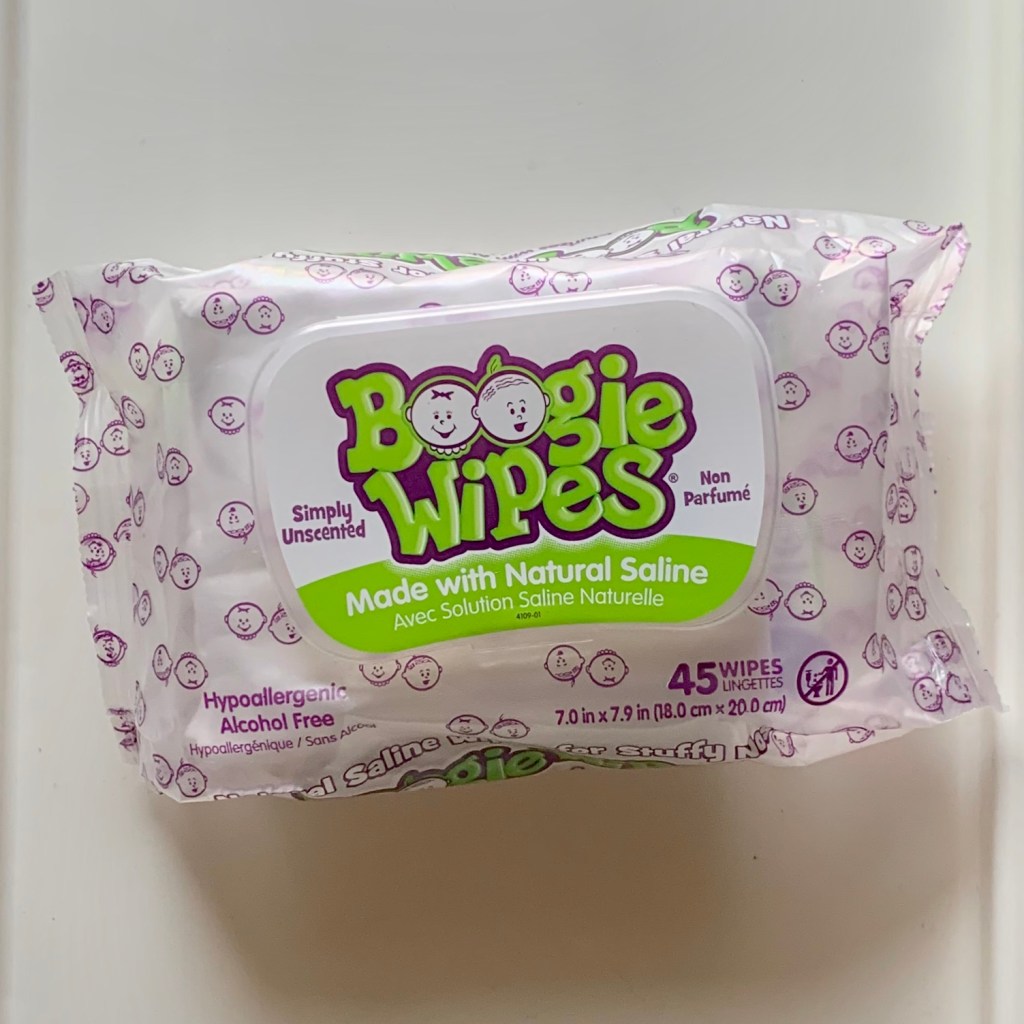
First off, if there’s a ton of sticky nasty crud coming out of baby’s nose, you want to keep it contained. I like to keep an extra pack of wipes handy to wipe my baby’s face (and hands!) fairly frequently. You’ll have to do this constantly, but it goes a long way to keep baby clean and germs at bay. If snot builds up and gets crusty (like after a nap), I run a washcloth under warm water and (as gently as I can) dab over his face until it’s gone. I use Boogie Wipes when I can, and they’re nice because they aren’t as drying as regular wipes, so if baby’s skin is starting to get irritated from all the wiping, they’re a nice option. I’ll also dab Aquaphor or Vaseline on dry patches.

I’d absolutely recommend using a good saline nasal spray to break up stubborn snots and help open everything up. I really love Boogie Mist the most since the nozzle fits perfectly in the nose and sprays quick, even bursts. Have a wipe handy when you do this since it’ll make baby’s nose run like crazy, but it really helps so much. It’s especially great when there’s a lot of dried and crusty crud stuck up in there. Kids absolutely hate it, but I can’t live without it.

Some people swear by the FridaBaby NoseFrida snot sucker thing, and the ONE time I’ve actually managed to use it, it worked like a dream. However, at least at this stage, my kid fights like hell any time I pull it out so I kinda gave up on it. Maybe when he’s older…if it works for you, go for it!

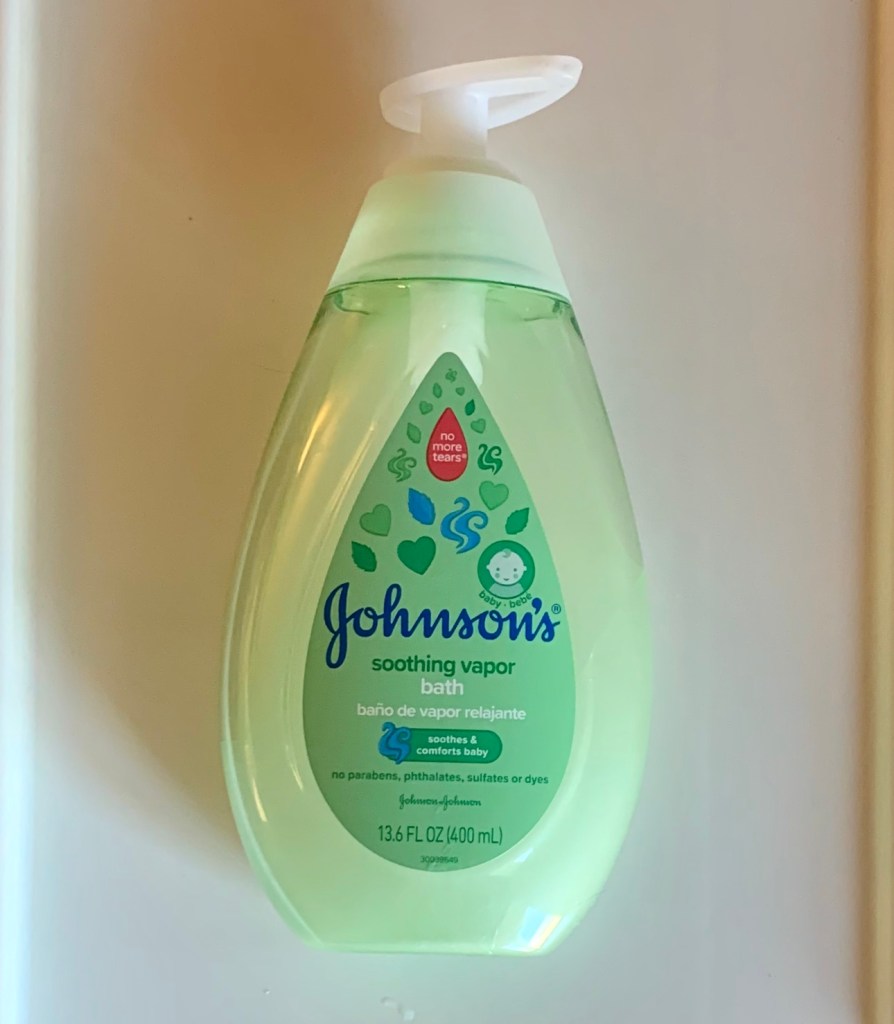
Warm baths are a must! They really help keep baby clean and relieve some congestion as well since the heat and steam open up the sinuses somewhat. When my son is sick, it isn’t unusual for me to bathe him in the morning AND evening just to keep him as clean as possible. I happen to love adding a few pumps of Johnson’s Soothing Vapor Bath to the water and also using a drop or two to help wash his face. I’m not sure if it actually has any decongestant effects on its own, but it’s really gentle and smells amazing!

An anti-inflammatory medication like Motrin is a good idea to help swelling in the sinuses and relieve any sinus pain or headaches. I personally think that it helps quell my son’s fussiness a good deal. If he’s especially fussy, I’ll give it during the day as needed (no more than once every 6 hours) and always before bed at night–I have found that a bedtime dose seems to provide enough relief for him to sleep much longer than he would without it.

Speaking of nighttime, running a humidifier at night helps to keep the air moist, which helps sooth dry skin and decongest. What you should NOT do is have your baby inhale steam directly…this may be a “traditional” remedy, but warm fluid streaming into the lungs can cause aspiration pneumonia. Just don’t.

It’s a bit retro, but I also happen to love Vick’s Vapo-Rub. A little goes a long way, but a little bit massaged onto baby’s chest as needed helps clear the nose as well. Again, it can make their nose run, so have a wipe or washcloth handy! Do keep in mind, though, that the scent is strong and some babies may not love it—my son definitely will NOT tolerate it at night, so I reserve it for daytime use.

Patience, patience, patience! Viral colds can take 7-14 days to resolve. Even with some of the things mentioned above, baby is still going to be cranky and not feeling like themselves. It sucks. Just do your best and know that it won’t last forever!

Finally, keep yourself healthy! Illnesses definitely bounce around households, and you want to be doing everything you can to avoid catching your child’s cold. Make sure you’re washing everyone’s hands constantly, wiping down surfaces and toys (basically anything baby touches), eating well and staying hydrated, and getting enough sleep (easier said than done, I know!). At the moment I’m also taking a spoonful of Elderberry syrup every morning because supposedly it boosts immunity? I honestly have no clue if it works. Ask me in a few months. But I’ll take all the support I can get 😉

Most cases of stuffy and runny nose alone are viral infections that can really only be treated with time and supportive treatment rather than antibiotics. That said, if your baby has a fever of 100.4F (38C) or more, give the doctor’s office a call. Also consider calling if they are having problems breathing, seem to have a sore throat, are coughing, or seem to be dehydrated.

Image by Myriam Zilles from Pixabay

So Your Baby Has a Fever…Part II, What to Expect at the ER

When you get to either urgent care or the ER, a few different people are going to ask you a laundry list of questions about your child’s fever and associated symptoms (I mentioned a bunch of these in my last post). Again, it’s a good idea to really think through these things so that everyone gets a good story, and it’ll make the whole process more efficient and more likely to get the right diagnosis and treatment. It’s our primary goal to identify or rule out the most serious possible diagnoses first, then narrow it down from there.

I will reiterate this point 374682765 times on this blog in many contexts, but remember that you know your baby more than anyone else in the universe. Your opinion matters and your gut feeling matters. Don’t be afraid to ask questions and put your foot down if you feel like we’re overlooking or missing something. A good doctor will take your input to heart and, if they disagree, will diligently explain their clinical reasoning.

What we worry about the most are serious bacterial infections (SBIs). These include things like bacteria in the blood (bacteremia), urinary tract infections, pneumonia, skin infections, bone and joint infections, intestinal infections, and brain infections (meningitis). All of these things are crucial to rule out as soon as possible because they can be life threatening if they aren’t treated early. This is where vaccine history becomes really important, too–if your child is up to date with all of their required vaccinations, we can rule out some of the most deadly infections right away.

What happens next is largely based on age. Essentially, the younger the child, the more diagnostic tests we’ll perform regardless of symptoms and the greater the odds that we’ll want to admit them for observation. Keep in mind that every hospital and individual provider will have some variations in their approach, but most of what we do is based on the most current research and guidelines by our governing bodies. Basically, what we do is guided by the best science we have at any given time.

No matter how old the child is, we start with a complete physical and neurological exam and re-take their temperature. We are especially looking for signs of distress (inconsolable crying, drowsiness, lethargy, moaning, etc), signs of respiratory distress (blue color, shortness of breath, slow or rabid breathing, or irregular breath sounds), rashes, dehydration, abdominal pain, head or neck pain, etc. If there’s evidence of a sore throat, we’ll probably do a rapid strep test and during flu season, we will most definitely swab for flu as well.

Under 30 days old: We throw the book at newborns because they’re the most vulnerable and difficult to diagnose. We run pretty much every test we have and are very likely to admit them. Regardless of accompanying symptoms, we take blood and urine and get a lumbar puncture (also known as a spinal tap). If the baby has any diarrhea, we will get a stool sample. We will very likely get a chest XRay to evaluate for pneumonia.

1-3 months old: These kids will automatically get blood and urine taken as well. However, we won’t do the lumbar puncture if the baby isn’t having any neurological symptoms or signs of a more serious infection in their blood or urine (based on white blood cell counts). If the baby has any diarrhea, we will get a stool sample. We won’t get a chest XRay unless there are respiratory symptoms or signs of more serious infection on labs and urine.

3 months to 3 years: We’ll run blood and urine like before. All children under 2 years get a urinalysis and urine culture no matter what. We won’t do a lumbar puncture unless there are neurological symptoms, regardless of blood and urine results. Again, stool sample if there’s diarrhea.

Ok, so after you’ve been in the ER or urgent care for what seems like forever and your poor baby gets poked and prodded by a hundred different people, we will determine if we think that the fever is likely to be a serious infection or not and what we’d like to do about it. If it’s more likely than not that the infection is bacterial–and keep in mind that we are more cautious the younger the child is–then we’ll start the child on antibiotics based on where we think the infection is coming from. Based on vital signs, test results, and our overall feeling about the patient’s condition, we may decide to admit the child for a day or more to make sure they respond to treatment. Or, we may send you home, but with strict instructions to administer medication and follow up as soon as possible with your pediatrician or family doctor.

Having to run your sick baby to the emergency room is never anyone’s idea of a good time. Trust me, I know. Hopefully if and when it happens, I hope that this post gives you a better idea of what to expect and a little insight into the rhyme and reason for the tests and exams we do. It’s exhausting and frustrating for a lot of parents, but we always have the health and wellbeing of the child forefront in our minds for every decision we make. Again, we approach each patient with the hope that we can first exclude the most serious infections–we aren’t trying to scare you–then work our way down to the most likely causes of fever based on our battery of test results. Because they’re so young and more vulnerable than healthy adults, we err much more on the side of caution than we would with older patients and are more likely to prescribe antibiotics or admit to the hospital.

As always, prepare yourself by asking yourself questions about your child’s symptoms and medical history before you arrive and don’t be afraid to ask any and all questions about what’s happening. We’ll all get through it together 😉

Image by Pexels from Pixabay

So Your Baby Has a Fever…

It happens. A lot. ESPECIALLY this time a year, in the colder months, when we’re all cooped up bouncing all of our germy fluids and air and God-only-knows-what back and forth for days.

As a very-soon-to-be family physician, I can tell you that babies and small kids with fevers make up a huge proportion of office and ER visits this time of year. As a mom of a 1 year old, I can tell you that there’s nothing scarier than to pick up your burning hot, lethargic, and extremely fussy baby and not know what’s wrong or what you’re supposed to do.

Don’t panic. I got you. At this point, I’ve worked in inpatient and outpatient pediatrics as well as the ER—so whether you need to go to the doctor’s office, urgent care, or the ER, I can give you an idea of what to expect when you get there and what you may or may not be able to handle at home before you decide to go. This post specifically addresses how you can evaluate your child at home and make a decision about whether or not to seek medical care.

First, take your child’s temperature so you know what you’re dealing with. Using a rectal thermometer is always best and the most accurate, but I do know from personal experience that a fussy baby can make it impossible, so under the armpit also works, as does a forehead thermometer (I got mine at Costco and it’s awesome).

Next, ask yourself some questions. Sounds like a lot, but these are questions doctors will ask you multiple times no matter which level of care you choose, and having your story straight goes a long way in making sure you get the care you need as quickly as possible.

  • Is your child nauseous or vomiting?
  • Is your child wheezing or having trouble breathing?
  • Is the child eating and drinking less than normal? (Emphasis on the drinking).
  • Do you think they’re dehydrated?
  • Can you see if their throat is red or swollen?
  • Are there any rashes or skin changes?
  • Is the child pulling at their ears? Can you see any redness or inflammation in the ear?
  • Are they sleeping or napping more or less than usual?
  • Are they peeing or pooping more or less than normal? Are they having diarrhea?
  • Are they acting like themselves or are they especially fussy or especially lethargic or out of it?
  • Are they up to date on all of their vaccinations?

If the child’s fever is less than 100.4F (38C), they are still willing and able to drink fluids (breastmilk, formula, milk, or water), they aren’t overly fussy or lethargic, and your gut tells you that there probably isn’t anything super sinister going on, it’s ok to give a single dose of acetaminophen (Tylenol) or ibuprofen (Motrin) at home and see if it helps. If the fever comes down within an hour or two and they seem to be feeling better, you can continue monitoring their temperature at home and giving your medication of choice per the package instructions until the fever resolves.

If the fever is over 100.4F (38C), fever doesn’t seem to be getting better with over-the-counter meds, your child is having some of the symptoms mentioned in the question above, or if you just have a bad feeling about the situation, call your pediatrician or family doctor right away. Even if it’s the middle of the night or the weekend, they should always have an answering service that will relay your message to the physician on call. They should call back within an hour or so and will ask you to explain what’s going on and then give a recommendation about what to do next. If, for some reason they don’t get back to you and you’re really not feeling great about what you’re seeing, it’s reasonable to go to an urgent care or even the ER.

I cannot stress this enough—you know your child more than anyone else in this vast, ever-expanding universe. I just laid out a very step-wise approach to evaluating your child’s illness at home in a way that I hope may avoid unnecessary visits to the emergency department, but real life doesn’t always work according to an algorithm. If, at any point during this process, you just have a gut feeling that there’s something off or that there’s more going on than what you can clearly see, go to the ER. The worst that can happen is that there isn’t actually anything wrong and you get some reassurance from a professional, and in the world of parenthood, peace of mind is priceless.

If and when you do decide you need to take the case out of the house and see a professional, here’s an idea of what you can expect.

Image by StockSnap

Introduce Yourself (Example Post)

This is an example post, originally published as part of Blogging University. Enroll in one of our ten programs, and start your blog right.

You’re going to publish a post today. Don’t worry about how your blog looks. Don’t worry if you haven’t given it a name yet, or you’re feeling overwhelmed. Just click the “New Post” button, and tell us why you’re here.

Why do this?

  • Because it gives new readers context. What are you about? Why should they read your blog?
  • Because it will help you focus you own ideas about your blog and what you’d like to do with it.

The post can be short or long, a personal intro to your life or a bloggy mission statement, a manifesto for the future or a simple outline of your the types of things you hope to publish.

To help you get started, here are a few questions:

  • Why are you blogging publicly, rather than keeping a personal journal?
  • What topics do you think you’ll write about?
  • Who would you love to connect with via your blog?
  • If you blog successfully throughout the next year, what would you hope to have accomplished?

You’re not locked into any of this; one of the wonderful things about blogs is how they constantly evolve as we learn, grow, and interact with one another — but it’s good to know where and why you started, and articulating your goals may just give you a few other post ideas.

Can’t think how to get started? Just write the first thing that pops into your head. Anne Lamott, author of a book on writing we love, says that you need to give yourself permission to write a “crappy first draft”. Anne makes a great point — just start writing, and worry about editing it later.

When you’re ready to publish, give your post three to five tags that describe your blog’s focus — writing, photography, fiction, parenting, food, cars, movies, sports, whatever. These tags will help others who care about your topics find you in the Reader. Make sure one of the tags is “zerotohero,” so other new bloggers can find you, too.